Proof That Miracles Really Happen
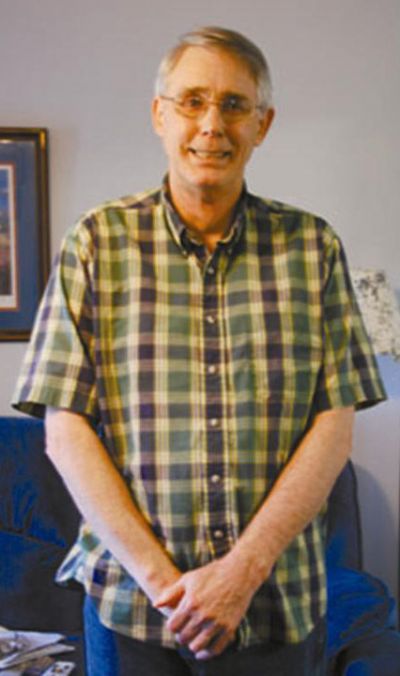
There are things that happen in life each day that make you say, “wow” and some that leave you speechless. Some call these happenings gifts from God, some call them ‘miracles,’ while others just think it’s coincidence or luck. But no matter what the definition, a miracle is exactly what is here through the story of Stephen Cargile.
Stephen has been in my life as long as I can remember. My mom met his wife, Roxie, when I was a few weeks old and was lucky enough to become best friends with her. Roxie kept me while mom worked before I started school, and often afterwards. I grew up with her son, Sean, who is my best friend.
Stephen has always been in my life. Early on I heard tales of his life, like he worked hard, was once struck by lightning, and that he loved the Braves, but mostly I learned of his love for trains.
He was a man of few words, but when he spoke, Sean and I, we listened. That was my memory of Stephen until yesterday when I went to interview him. What he told me, the real life story, is nothing short of amazing. So amazing that I had to share it with you.
Coming up on four years ago in October, the 16th to be exact, Stephen will have been a Mesothelioma cancer survivor. It was on this day in 2006 that he had a lung collapse and went into the hospital. In an effort to seal that lung, the doctors found that he had mesothelioma.
{{more}}
Mesothelioma, meso for short, is a form of cancer that Stephen says is jello-like and Roxie says makes a spider web pattern on the sides of organs. Stephen’s meso was found on the outside of his left lung, and when it was found the doctors determined, after a biopsy, that he was in between this first and second stage of meso. Stephen’s medical treatment began in Macon where he saw a cancer specialist. The doctors did not recommend surgery to remove the meso, but recommended weekly chemotherapy instead. Stephen asked how long the treatment would last before there was any improvement and the answer he got was “forever.” What Roxie and Stephen heard was “’til you die.”
The Macon doctors told Stephen the worst news ever in his mind; they gave him a timeline to live. They said that with no treatment he would live about six months to a year, and with chemo treatment he could live up to 18 months. Stephen determined that with chemo or without, he was going to be sick and asked himself why get the treatment. All the while he was in the hospital in Macon, and continued to see those daytime commercials about meso families and patients. He said that his first thought was what a scam, but after a few days, Roxie called the Cancer Treatment Center of America.
After a stint in the hospital, four weeks, he was dismissed to ‘self care’ after being put on enough medicine to make him “comfortable,” so that he could go home. He was dismissed with a chest tube as he opted out of the chemotherapy treatments reasoning that he would rather spend his remaining months enjoying his family rather than being sick.
After a short while of being back home, and some internet research, Roxie decided that the next best thing to do would be to make an appointment with the Cancer Treatment Centers of America (CTCA) in Tulsa, OK.
Roxie said that they had to return to Macon for a check-up and she could remember four years ago like yesterday.
“Standing in that doctor’s office, the doctor folded his arms, leaned against the wall and said ‘do you not hear me, it doesn’t matter,” he was refurring to him getting a second opinion and that nothing else that was to be done would make him better one way or the other.
The next day Roxie went out and bought a new van—he had no idea at the time how they were going to afford it—and two weeks before Thanksgiving 2006 she and Stephen drove to Tulsa.
I have to mention here as a sidebar that so far there was little out of pocket expense because Stephen was employed at Poly Tech, and they were kind enough to extend his coverage for over a year, and he was on Roxie’s insurance as well. The two of them had co-pays and the van and are helping raise a granddaughter, Bethany, and help out Sean some too. The two are very grateful for the generosity of the community and especially of Poly Tech for everything that have been done for them.
Back to Tulsa
From their first visit to CTCA, Stephen had a new outlook on his meso. He even said that he felt better the day he walked in the door out there. The first visit they were out there about a week and learned that CTCA was concerned about quality of life, that they treated his whole body, and made the quality of life better. There was no timeline on his life. The doctors said,
“We don’t believe in statistics, but believe that only God and you know when your time is up.”
The doctors told Stephen that they could not perform surgery because he had the chest tube, but recommended seven rounds of chemo, which would only shrink the meso, and if that worked he could be a candidate for surgery. The chemo would be one round every three weeks, for a total of 21 cycles of therapy.
During the cycles, Stephen and Roxie learned that CTCA took the stress out of being sick. Before using the centers the two were skeptical because of all of the bad banter they had heard about the center. They experienced another side of the center. They told of CTCA paying mileage for travel when the two had to drive out (Stephen could not fly with his chest tube) or paid for the patient’s plane ticket if there was a need to fly.
When they flew, the two traveled as “celebrities,” and were greeted at the airport with an upscale town car and taken to their accommodation, which on more than one occasion was the Radisson Hotel, and the service would take the patient or the care giver anywhere they wanted to go within a five mile radius. They also had transport to the hospital, discounted hotel rates (as low as $35 per night). Overall, they were catered too and during the stressful time, the “details” were taken care of. There was a chaplain on staff at the center and with your consent, she would come an talk to you during chemo and other stints.
At the CTCA the entire body is worked on and evaluated. You see a number of doctors who specialize in a particular area of the body while there. The pulmonary doctor in Tulsa decided to take out the chest tube and made Stephen aware that the lung could collapse, but when the tube was pulled the lung functioned on its own.
After the chemo was finished, from about April 2007 to September 2007, Stephen returned home to wait. They went five months without knowing anything. So again Roxie began searching the internet for something else. She was at the newspaper office (this was before DSL was available at her house) searching with Kathy Mudd other doctors that could possibly perform the surgery.
Roxie said that Kathy yelled at her across the room and said “ya’ll need to go here, this guy has a 40 percent success rate for all patients living over five years,” which was higher than the 3-4 percent rates from all previous inquiries and the basis for the search. The name was Sugarbaker and he was in Boston. Roxie said it was late, and she jotted down his information and headed home.
Once she stepped in her living room to sit and relax, there was a book laying upside down in the middle of the floor. She picked it up and flipped it over and there was Dr. Sugarbaker and his staff staring back at her from the cover. She literally could not believe her eyes, and wondered how in the world that book got there.
Earlier that year, sometime in February, a Charleston law firm sent out a prepackaged mass of materials. Roxie recalls opening the package, but like much mail it got piled in a chair to be looked at. She has no idea how that book came to be in the middle of her floor, but credits God for placing it there.
Roxie called their social worker, provided by CTCA, and the social worker asked if she had made an appointment. Roxie said “no,” and Charlene told her to hang up and make an appointment. Roxie made an appointment for nine days later. During these nine days she had to get Stephen’s complete medical history, pack, find a flight and a room.
The social worker called Roxie the next day and told her that Corporate Jet had donated tickets and they were to be given to Stephen, she also booked them a hotel room for $25. Roxie came home and told Stephen that they were headed to Boston in eight days and he said there was no need to argue with her so he was ready.
In Boston, Stephen saw Dr. Sugarbaker in July 2007, and he said that he recommended the surgery and gave him a “to do list,” for when he got home until time for the surgery. He said that Stephen was to get a sonogram of his heart, get checked for diabetes, and walk at least 20 minutes a day. Stephen said that his brother Timmy Cargile came and they walked down a ways from the house and around the grave yard about three times and back to get in his 20 minutes that was recommended by Dr. Sugarbaker. He said each time in the grave yard he would “talk” to the graves and tell the souls that
“he just came to visit, his time wasn’t up yet.”
About two weeks before Stephen was due back in Boston for his surgery, he tells Roxie that he thinks his lung has collapsed again, and that he didn’t care. He said that a chest tube is too painful and he was determined not to have another put in.
Once in Boston, the initial tests were ran and Stephen and Roxie went out to dinner. The two walked three blocks to the restaurant and said that they had an amazing dinner. Roxie shut off her cell phone as to not disturb the time, and when she got out of the restrurant there was an urgent message from the doctor saying that Stephen needed to go to the emergency room, as he had a collapsed lung.
This became funny to the couple, because it had been collapsed for two weeks and the urgency on the message sounded so severe.
The two were staying in a “host” house and went back to pack a bag and hailed a cab (Boston was not as friendly when it came to transportation as Tulsa) and the cab took the two to the wrong hospital. Once this was discovered they walked out of the wrong hospital refusing to get into another cab and made their way a block to the other hospital.
Roxie says that two nurses chased them down explain the severity of the lung and not needing to walk, where she explained that they’d walked this far, it would be fine.
Upon arrival at the ER at the correct hospital, there was an orderly waiting for Stephen with a wheelchair as the two walked up. You see how this is getting comical, Stephen was seated and taken into the ER. His vitals were checked and his oxygen levels were up. There was a collapsed lung and Stephen was never even short of breath.
The surgery was scheduled and it was to take six hours. The surgery is severe and Dr. Sugarbaker does about four of these types of surgeries a week. Stephen came out of surgery well and did great in aftercare. He had three great days considering that they took one half of a middle rib, some pulmonary lining (the lung was at a 35 percent capacity), scraped part of the sack around the heart, took half of his diaphragm and rebuilt it, and as a result his stomach and heart both shifted a bit on their own. Needless to say, he was missing a great deal on his left side.
About the fourth day of recovery Stephen’s stomach herniated and he stopped eating. He was put on two feeding tubes and was very weak. About four weeks later, after visiting Cambridge Rehab Hospital in Boston, Roxie went to Dr. Sugarbaker and asked if it would be all right to take Stephen home, as there was an excellent rehab program here. He approved and they were on their way back home, Stephen still weak and undernourished from not eating. This made the trip difficult on a plane.
December 2, 2007 Stephen had yet another “miracle,” his feeding tube simply fell out. Roxie said at the time he was still not eating, and to this day Stephen can still not look at a Boost drink without being nauseous. Roxie said she thought then that she would watch her husband die.
Stephen needed follow up for the chemo that he received in Tulsa, as recommended by the surgeons in Boston, and they were referred to a group in Augusta. In Augusta, the doctors did not have a clue about anything, so three days later Roxie and Stephen decided to go back to Tulsa. It was again amazing to watch the change in Stephen, Roxie said. Within three days they got him to eat, mainly Powershakes full of protein, and he was up without a walker.
He was scheduled for x-rays and a CT scan in Tulsa at 11 a.m. Stephen said that you cannot eat for the prep at all the evening before and when he came out of these tests, he was starving. He asked Roxie what was being served in the cafeteria and she said “ribeye and baked potato.” He said that was the best food he has ever eaten, much less in a cafeteria. He ate every bite of that ribeye, and most of that potato not being able to finish because it was the size of a melon.
He saw the gastroenterologist who told him that his stomach was working, it was just elongated. He was advised to eat smaller portions, and was prescribed Xanax for nerves.
Stephen had his last round of chemo in February 2008 where they scanned his stomach and abdomen area because of the common reoccurrence there. It was in April 2008 that Stephen learned that he was completely cancer free—two years after the detection and over six months longer than he was projected to live by the doctor in Macon that said “it didn’t matter.”
Currently, Stephen has to have check ups twice a year, about every six months. He says that he has no idea where he could have contracted the disease as it is from exposure to asbestos. He thinks back with me sitting there as to all of his jobs and his being in the Navy. He gave me a brief history of asbestos and that it takes about 20 to 30 years for the meso to show up in people.
He has been educated and wants to educate others on this cancer becoming diagnosed more often. He talks now with patients going into surgery and offers encouragement and tells them that he never had any pain associated with surgery or the actual meso. It was the chemo that made him so sick.
He knows that a number of people have been misdiagnosed and he recommends CTCA for a second opinion. He knows that meso is still undergoing heavy research and treatment and diagnosis is improving each and every day.
He has had some side effects, such as vision problems, and memory loss which is commonly referred to as “chemo brain.” He says that hot weather sometimes hinders him and he has shortness of breath and that his left side feels heavy sometime from all of the fluid. When he asked Dr. Sugarbaker about this at a recent check up, and his response was “deal with it, you’re up living and walking.”
He says that he wants to talk to people and encourages anyone with questions to contact him at home 706-468-8130.
He wonders how many people are given an expiration date, and go home and die, because the doctor must know what he’s talking about. He said that going home to die was “never an option” for him.
He did want the family to know what he was going through and family members donated plane tickets so that Bethany and Sean could visit Stephen in Boston.
He also took Bethany to Tulsa with him and she got to watch the preparations being made so that she could see first hand what all he was going through with his chemo treatments, rather than experience everything through a phone call. He said that it’s easy to get a phone call with “he’s all right,” but seeing it first hand is more real and understood.
He talks of connecting with other family members and remembers telling them all “not to worry,” and to “do well in school.”
He said that he thanks everyone in this community and around the world for the prayers, encouragement, and well wishes. He said that
“if you have to be sick, you should be sick in Jasper County because this place will lift you up.”
He said that he knows he was on numerous prayer lists which has a lot to do with his survival.
The miracle man is currently working at Monticello City Hall from 10 a.m. to noon answering phones and organizing files. He says that those girls in the front office do an amazing job and work hard in there.
Since April 2008, Stephen has had one scare of reoccurrence, which was dismissed by Dr. Sugarbaker. For now he feels that the only way that he can give back is by telling his story and making it known to raise awareness about meso.
He is now constantly trying to be out in public, something he was reluctant to do before his illness. He knows all too often that someone dies of cancer and you realize that since their diagnosis they have gone into hiding.
I would like to thank Stephen and Roxie for their time, and for this amazing story. I had an opportunity to laugh with them and got emotional when I was hearing of all of the little “miracles” that happened during this time.
I learned a lot about giving, and about how well this town does when someone is in need. Roxie and Stephen both want to
“thank the Primary school faculty, friends, and co-workers for their understanding and support and for Poly Tech’s help from the start.”
Them along with this community are the reasons that Stephen is still with us today.