Educator Shares Cultural Lessons From Abroad
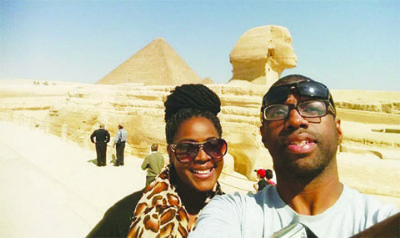
(Editor’s Note: Peter Card, along with his wife Cheryl, are living and teaching abroad in Al Ain, Abu Dhabi in the United Arab Emirates (UAE). Mr. Card is a Jasper County native and former local educator who decided to embark on this adventure and cultural journey. He and his wife took leave of absences from their jobs last year and headed to the UAE. The piece that follows is his second correspondence since arriving June 2014. While in Abu Dhabi the Cards have extended their travels throughout the Middle East, Africa, and Asia. Also, a very gracious thank you is extended to Morad El-Jourbagy for the Arabic translations.)
By PETER CARD
My name is Peter Card. I am currently teaching and living in Al Ain, Abu Dhabi in the United Arab Emirates (UAE). This is the second correspondence to share my adventures living abroad. I am truly amazed at where life has taken me. I hope by sharing my experiences it encourages you to pursue your dreams as well. God Bless!
In my first piece, I mentioned that part of the difficulty in living here is adjusting to the cultural norms of this part of the world. By cultural norms, I am referring to ways of life in the Middle East that are not necessarily better or worse than practices that we have in our county, just different. In this article, I will discuss the ten biggest “culture shocks” I have found living here.
10. Smells
Oils, perfumes, colognes and incense are huge in this area. At the mall, samples are readily given out as well as incense burning in some corridors. In addition, smoking in public areas is a regular practice. Deodorant is not used by some portions of the population so in crowds, this is another strong aroma.
{{more}}
9. Landscape and Weather
I live in Al Ain, which is by far the greenest of any area in Abu Dhabi as it literally means “oasis.” It is full of date palm trees and other fruit trees as well as lots of beautiful planted greenery that line almost all major roads. In Abu Dhabi and Dubai, there is almost no natural plant life outside of public parks, which are quite attractive and very popular. Make no mistakes about it, we are in the middle of the desert.
Sand is everywhere, but it is amazing to see how these cities have been constructed. It rarely rains here and when it does it is treated much the same way the South treats snow. School has been known to close due to heavy rain. It may get as hot as 120 degrees here in the summer and kids wear coats (not jackets, full winter coats) to school when the temperature gets in the 60s, which really caught me off guard when I saw it for the first time.
8. Nighttime Lifestyle
Because of the heat, most people don’t come out until the evening. For this reason, it is not unusual for things like banks, doctors’ offices and other “daytime hours” businesses to stay open until 10 o’clock or later at night. In addition, many families with children are out late even on weekdays. The grocery store is like a ghost town during the day, but completely full late at night.
7. Islam & Prayer
The Middle East is comprised of Islamic countries of course, but the religion dominates the culture even more than I expected. Students take Islamic classes at public school from the earliest grade levels. This would be the equivalent of the United States having a mandatory Christianity class at all school levels.
Mosques are built so access to them is readily available to all followers. My apartment complex is building its own huge mosque. Malls and all large public gathering places have prayers rooms built into them. Television programs are interrupted with the five daily calls to prayer. People are allowed to leave work to go and pray.
6. Communications
We as Americans are so spoiled. When people come to the U.S., we say they should learn English. When we travel abroad, we still expect people to know English. Luckily for me, many do, but not all. Locals tend to speak Arabic and varying levels of English (some none and others fluent), while workers from other countries (mainly Pakistan, India, China, Philippines) tend to speak their native language, Arabic and some English. Surprisingly, basic communication is fairly easy. It’s those fine details that are harder to communicate that sometimes lead to misunderstandings.
5. Dress Code
I teased my wife about this so much before we left. Yes, when you are at work ladies are expected to have their shoulders and legs covered. They do not have to cover their face. Outside of work you can dress as you please, but you will get lots of stares if your bottom or your breasts are out. People may assume that there is a reason you are dressed this way (Read between the lines). Many Islamic ladies choose to wear the local garb known as an abaya (looks like a full black robe) and cover their faces anytime they are out in public.
4. Customer Service
To obtain a residence visa in Abu Dhabi, you must have a job. Without a job, you can not stay here (except for immediate family). For this reason, good customer service is mandatory. Too many complaints could lead to being fired and subsequently deported. Workers come out to your car if you blow the horn to take orders at restaurants as well as other small stores. Occasionally you see someone putting groceries in the cart for someone as well as removing them at the checkout line. Gas stations are full service. Many people don’t get out of the car. Most special requests are replied with “No problem”.
3. Food
One of the best culture shocks here is the food. As I mentioned in the first article, most large American food chains are here, although there may be only a few of each in an area. I eat this quite often, but we often eat food from this side of the world. This includes Iranian, Indian, Chinese, Syrian, and Lebanese. Most of these center around grilled meats (lamb, chicken, beef, seafood) served with many sides including hummus (dip made of chickpeas), tabouleh or fatoosh (two local varieties of salad) and low calorie bread. Most foods here are largely free from preservatives, low in sugar and cooked fresh daily. Spices are much more heavily relied on rather than just salt and pepper. In my opinion, food is generally fresher, better quality and cheaper. Fresh fruits and vegetables are ridiculously cheap and available in small grocery stores, large grocery stores and street markets.
2. Driving
From the best culture shock to arguably, the worst culture shock, driving here is VERY challenging. Everyone drives very aggressively. Police are not really used to enforce traffic laws but rather to decide who’s at fault after the accidents happens. Speed is monitored by cameras that send text messages to your phone immediately after one is “flashed” in the speeding zones. Signal lights are rarely used and drivers often don’t maintain their lane. Because of the low crime rate, traffic accidents are actually the main cause of death in the United Arab Emirates. My wife refuses to drive here and many hire drivers or use taxis as they find driving too stressful.
1. School Culture
School and driving are by far the two biggest challenges. High academic expectations are placed on students even in a second language while they are still trying to master their native language. In addition, many students may come to school even in upper grades with no English depending on if their family speaks English. Because of the breakdown in communication, behavior can also be an issue. School attendance is also not mandatory and parents have a much stronger voice in what happens at school.
If you would like to hear or see more of my adventures, you may look for Peter Card in the UAE on Youtube or the Peter Card Facebook page. Feel free to leave a question or comment at either of these places or email me at cardsimon@hotmail.com.