Chinese Visit Monticello
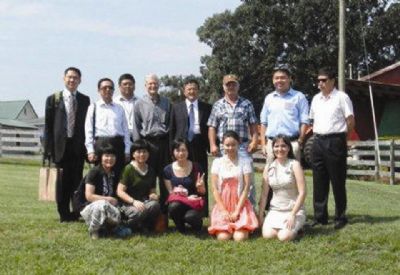
Members of China’s Ministry of Civil Affairs visited Monticello last Thursday as part of an educational trip sponsored by the Carter Center in Atlanta. The officials were from the Ministry of Civil Affairs (MCA) and were interested in how a small city like Monticello fits and works with all the other governments in the state.
All of the presentations, questions and answers were translated by the staff of the Carter Center.
From its inception in 1978, the goal of the MCA has been to “share concerns with those in higher levels, and relieve the suffering among the common people.” They have begun to focus on rural community development, helping rural communities and local governments to provide the same level of services and quality of governance as their urban counterparts. They aim to reduce disparities between rural and urban residents and decrease the risk of social instability.
Those offiicials who visited included Gao Hongshan, Huang Weiqun, Li Zhengliang, Yan Su, Yang Limei, Zhang Zhengzh Zhang Zuosen, and Zhu Banglin.
{{more}}
The group reported, “Delegation members all agreed during our debriefing meeting that the visit to Monticello was the highlight of their trip, and they all deeply appreciate the work of Monticello into making the day a success. The entire morning of presentations and visits really helped to advance their understanding of rural issues and local governance in Georgia.”
The group of officials heard from Monticello Mayor Glenn Newsome, Monticello Police Chief Bobby Norris, Ken Kocher with the Historic Preservation Commission (HPC), Sage Edwards on promoting the downtown Square, County Extension Ag Agent Lucy Ray, and City Manager Bob Schwartz.
The delegation arrived about 9 a.m., and were welcomed by the Mayor, who then gave a brief overview of Monticello government. The visitors learned that monticello is a small city, founded in 1808, with a population of 2,687, and a budget of $8.6 million.
They learned that Monticello is a full service city, providing police, streets, zoning, parks, garbage, and utilities. They learned that many cities do not provide utilities.
The visitors learned that there are 543 cities in Georgia with different services in each one. Only 49 are considered “electric cities,” and that most don’t have electric or natural gas services. They also learned that most cities do not have schools, and that some do and some do not offer recreational facilities.
Most cities provide fire service, they learned, but in Monticello fire protection is provided by the county volunteer fire department.
Chief Norris spoke briefly about the role of the police department in a small city, and they learned he had served as a police officer in Monticello since February, 1986.
Ken Kocher then explained the purpose of historic preservation, and said that the commission prevents the loss of historic buildings, insures sensitive additions, guides new construction and promotes restoration and rehabilitation.
He explained how the historic district was designated, and how rules and guidelines are enforced. He explained why the HPC was created:
“The historic, cultural and aesthetic heritage of the city is among its most valued and important assets and that the preservation of this heritage is essential to the health and prosperity of the people.”
Georgia is eighth in the nation for tourism, said Mr. Kocher, but fifth for heritage tourists. And studies show that heritage tourists spend more money and some return to be residents. He said that cultural and heritage travelers are more interested in experiences where the destination, its buildings and surroundings have retained their historical character.
Sage Edwards talked to the group about the importance of maintaining the downtown Square area, and how it can be used to attract tourists. Whie she served as Better Hometown Director, Ms. Edwards was instrumental in hosting several “My Cousin Vinny” tours, and had a lot of activities going on in town to bring people in and get them to spend money here. One highlight for the years she served was the fall hot air balloon fest.
Mr. Schwartz then explained to the visitors how the city interacts with other agencies. He said the city receives technical and financial assistance from both state and federal agencies, and that the city works with the county government. He explained about regional planning, and told of the state’s role in building roads.
He told how different state agencies help the cities and counties, as well as how they regulate services.
Ms. Ray told the visitors that there are about 210 farms in Jasper County, with an average size of 250 acres. Some 50,000 acres are in farms, with equals some $45 million in revenue. Ms. Ray took the visitors to see one of several working dairy farms in the county. They visited Char-Jan Farms, and met with Charlie Lane.
After the farm tour, they group rode by the parks in Monticello, and then gathered back at the visitors’ center for lunch before heading out.