The Battle of Sunshine Church
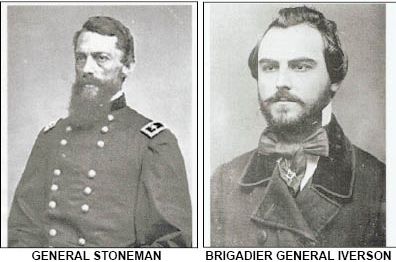
The battle of Sunshine Church was a very historic and important Calvary engagement in July of 1864 between the Union troops of General Stoneman and the Confederate troops of General Iverson. The battle took place on the Hillsboro Road (now Highway ll) halfway between Round Oak and Wayside at a small church named Sunshine Church which was just west of said road.
It would be impossible to go into all the details of this historic battle in the limited space provided here. Therefore I would like to show how it involved Monticello and Jasper County. To do this I would like to lay a little ground work so that everyone can understand what was involved at that time.
First, General Sherman had arrived in Atlanta and had it partially under siege but was having a hard time moving in. The Southern troops put up a real defense and held him here for several months.
Second, the residents of our county, as well as Jones and Putnam and others around, consisted of widows, wives, small children, a few black people and old men unable to join the army. They were living on a shoestring trying to feed their families and tend the farms with the men folk off at war.
Third, there were no troops or men around to defend them since most all of the fighting had been in the Virginia area for several years. Food was extremely short but with limited gardens, livestock and chickens they were surviving.
Fourth, this was a major Calvary battle that involved some 2,000 or more horsemen on each side. The Confederates won the battle and took Stoneman as prisoner. This was the only Calvery battle that the Southern troops won during the Atlanta campaign and it gave them great confidence.
Fifth, the troopers on both sides at Sunshine Church were very young, maybe 18 to 25, trained on the battlefields and not at West Point. Wounds were inflicted on both sides and doctors were short with very little medicines and pain killers to help.
This Sunshine Church was used by the Yankees and the school and church at Honey Hill near Hillsboro were used by the south for the wounded. A lot of amputations were performed on the spot.
Sherman was moving troops around Atlanta and trying to take out all the local railroads that were supplying our troops there. He gave orders for General Stoneman, a Calvary officer, to take about eight Calvary brigades (2,000 men) and one unit of artillery and proceed South keeping the Ocmulgee River to his west and attack and destroy the Macon and the Georgia railroad and then on to Andersonville Prison and free all the Yankees there. He left Atlanta in August and proceeded south through Lithonia and Covington and across the Alcovy and into Monticello.
Far from their base, they had to “live off the land” much to the dismay of our local people. Every single day they ravaged the land, destroyed crops, broke in and burned many homes and with much cockiness insulted the local families. The blacks thought they were being liberated and followed the columns as they passed. The troops approached the Jasper County plantation home of Carden Goolsby; they told the brave old man to get on a mule and lead them to where his stock was hid. He replied,” I’ll be damned if I’ll ride a mule, I’ve never ridden a mule in my life and I’ll not start now for a damned Yankee.”
He was persuaded to ride and show them his stock. History says they also approached the home of a Mr. McKissic near Hillsboro. His wife knew his feelings and temper and persuaded him to run out the back door as the Yankees approached. He grabbed his shotgun over the door as he went out. The troops immediately tried to run him down but as they drew near he turned and shot one trooper and killed him.
They viciously jumped on him and the officer in charge, sitting in the kitchen drinking buttermilk, threatened to hang him over his door and burn the house but they didn’t. They broke all the dishes in the house, confiscated all the jewelry, cut up the ladies dresses with a saber and took all the livestock and fowl. McKissic was taken prisoner but later released when Stoneman surrended.
Stoneman continued on through Clinton, destroying and scavenging as he went and finally arrived at Macon. He had been told that the bridge there had been washed away and he had found no other bridges across the Ocmulgee along the way.
The Macon home guard, with five regiments of young school boys and old men, were well entrenched and repulsed his advances. Seeing that he could not cross the river into Macon and destroy the railroad or advance to Andersonville, he abandoned his plans and started back the way he had come. Some 500 local Negros, now free, were following his column on foot and in wagons.
Confederate General Iverson and his Calvary had been given orders earlier to follow Stoneman south from Covington and attack him wherever found. Stoneman and his 2,000 troops were now on the Hillsboro road headed back toward Atlanta. Iverson had word that Stoneman was backtracking in this direction and he had his Confederate Calvary with 12 regiments (2,000 men) and artillery waiting at the Sunshine Church area just south of Round Oak.
When they clashed all hell broke loose with cannon fire and screaming horsemen armed with sabers and riding hard. The Negroes scattered, frightened at the surprise encounter.
This clash of some 4,000 troops raged for a day and a half, in and out of the woods, up and down side roads, over fences, creeks and through deep gullies. The Confederates were hitting Stoneman on all sides day and night and totally confusing him. Stoneman was short on food and ammunition and much to the disappointment of several of his junior commanders, he decided to surrender since he was fooled into thinking he was grossly outnumbered.
It is said that Stoneman suffered with painful bleeding hemorrhoids and four days in the saddle did not help. His surrender was accepted and he and his prisoners were sent toward Macon for confinement.
Two of the Yankee units led by Col. Capron escaped to the east on Milledgeville road, to Eatonton, Madison and Athens. Later Iverson followed them with his Calvary chipping at their rear columns all the way. Athens militia put up a good fight, repulsed them, and captured several. They said the northern troops were not near as cocky and boastful as when they earlier advanced through Hillsboro.
The depleted column went on toward Winder trying to get to the Chattahoochee and Sherman’s forces. There was a big battle at Jug Tavern as Iverson closed in.
Col. Capron and his son (a soldier) and very few of the original Stoneman Calvary unit finally reached Union lines but they were wounded, tattered and torn by bushes and briars and some were even barefoot. General Iverson and his victorious Confederate troops finally called off their pursuit and moved over to prepare for Sherman’s planned march to Savannah with troops going through Monticello and Jasper County again.
This was a significant Civil War conflict, as well as Sherman’s march, that I do not think has been properly recognized by historical markers in Monticello. Thousands of Union troops passed through Monticello and Jasper County during this historic period. Maybe our leaders will see that new historical markers are placed near our Courthouse depicting this time.