Cold Weather Birds
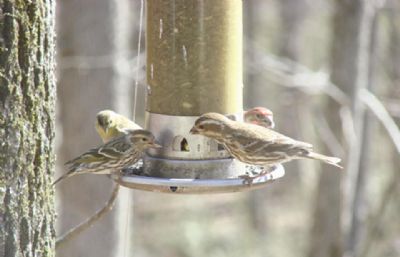
Snow is such a treat for us in central Georgia. We don’t get it too often, but when we do it’s like getting an extra holiday. Schools get closed, businesses and government offices shut down, and roads are usually too risky to travel upon. So, we may as well enjoy the white stuff while it lasts and take advantage of the time off.
One thing that I really enjoy about southern snow is watching all the songbirds that seemingly come out of nowhere to gorge on seeds at our feeders. We have a bunch of bird feeders, and consequently they attract a lot of birds throughout the year. But never are there as many individuals and different species as there are when the ground is blanketed with snow.
The snow and sleet event we received this past Sunday and Monday was a “perfect storm” for a bird-watcher like me. In anticipation of the wintery weather, I topped-off all of my feeders with sunflower seeds and readied a bucket of millet to spread on top of the snow when it stopped. When I awoke Monday morning, birds were everywhere. After I broadcasted the millet across the snow’s surface, the avian invasion hit full force.
The typical cardinals, mourning doves, blue jays, tufted titmice, Carolina chickadees, house finches, and chipping sparrows were all at the feeders, but this morning they were far outnumbered by two species of feathered visitors from the north—purple finches and pine siskins. Both of these species spend the warmer months much further north, mostly in the Northern Tier states and well into Canada.
Each winter both of these species move south to find more fertile feeding grounds. Many years these species don’t make it this far south, but this year both have had dramatic southern “irruptions,” a term used for largely unpredictable mass movements of birds triggered by food shortages.
If you frequently get American goldfinches and house finches at your feeders in winter, right now you probably also have siskins and purple finches mixed in with them, whether you have noticed or not. Neither species is very dramatically colored or patterned.
In fact, female purple finches and both sexes of siskins could be lumped into to the catch-all category of relatively drab birds known to birders as “little brown jobbies.” Pine siskins are about the same size as goldfinches, but are heavily streaked. When in flight, they show a significant amount of yellow coloration on their wings, but at rest only a slight tinge of yellow is apparent on the folded wing feathers, and on some individuals, the outer tail feathers.
The male purple finch is a fairly attractive rosy red-colored bird, but is easily confused with the typically more common male house finch. The first recognition of purple finches being present, however, is usually espying the brown and cream colored female. Color-wise, female purple finches are similar to female house finches, but their head pattern is what really stands out as different.
Female purple finches have a brown cheek patch overtopped by a whitish “eyebrow” that makes them look clearly different when grouped together in mixed species flocks. Another clue to help separate both sexes of purple finches from house finches is a much more strongly notched tail in the former.
Ironically, the great bird-watching weather that we got earlier this week is the type of weather up north that causes them to flee that part of the continent. It’s just too hard to find food when everything is covered with snow and ice.
Take for example the white-throated sparrow. This attractive and relatively large sparrow feeds by kicking leaf litter around to expose seeds below. Heavy winter snows in Canada block access to the leaf litter and its bounty of fallen seeds, sending this species south of the typical snowbelt. Infrequent southern snow events like this week’s also limit seed availability, but only for the short term.
Not surprisingly, elevated bird feeders and patches of seed spread across the snow’s surface are like gold mines to these snow and ice-handicapped birds. But, they can create gold mines for their predators, too, especially the sharp-shinned hawk. This small woodland hawk hunts primarily for songbirds, which it catches on the wing. Sharpies are also winter visitors normally found further north, and I always scan the scene for them when feeder birds unexpectedly and quickly scatter away.
A few of other species less frequently “irrupt” this far south, including the red-breasted nuthatch and the evening grosbeak. Neither has visited my feeders yet this year, but I have heard reports of both elsewhere in the state.
Keep an eye out for these specialties and let me know if you’re fortunate enough to attract any to your feeders. Happy bird-watching!