Snakes, Rarely a Threat
As a lover of snakes, I can’t believe I’m doing this. I REALLY can’t believe I’m doing this! I’m about to reveal a major hyperbole that wildlife educators and conservationists have been repeating for years and years to garner more public appreciation for snakes.
“Snakes are good because they eat mice, rats, and other rodent pests” is the exaggeration I’m referring to. I’m revealing the actual truth behind this statement not to out snakes and see more of them indiscriminately killed, but rather to show that their eating habits are much more interesting than what is commonly believed.
Also, I hope that by describing some of their unique tastes in prey, some folks will find them more interesting and therefore have greater appreciation of them. We in America seem to be really interested in watching shows on Animal Planet and the Discovery Channel about fascinating snakes in other countries, but we don’t really seem as interested in our own species. Truth be told, we have some pretty darn cool snakes right here in Georgia.
Of the 42 native snake species in Georgia, only 16, or 38%, commonly include rodents in their diet. And of those 16, only two actually specialize on rodents. Even the snake most commonly associated with rodents because of its name, the rat snake, will prey on many other types of animals, possibly even preferring them over rodents. Black, gray, yellow, and red (a.k.a. corn snake) rat snakes are excellent climbers and use this skill to reach birds and their eggs, as well as bats. At caves that have been gated to avoid human disturbance to the fragile ecosystems within, rat snakes often climb the rod iron gates and pick-off bats on-wing as they emerge to feed at dusk. Cool, huh?
Timber rattlesnakes and pine snakes, the latter species not occurring in or near Jasper County, are the only snakes in the state that primarily eat rats, mice, and other rodents. Eastern diamondback rattlesnakes, also not occurring in or near Jasper County, eat lots of rodents, especially when they are young, but larger individuals have a decided preference for rabbits…adult rabbits.
So what do other Georgia snakes eat? Collectively, just about every type of critter out there, but individually they have very notable specialties.
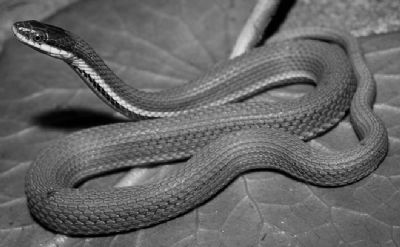
To me, the most diet-specialized snake in our state, which is found in streams here in Jasper County, is the queen snake. Queen snakes eat ONLY soft-shelled crayfish. Most folks have heard of or even eaten soft-shelled crabs. These are not a unique type of crab, but simply your standard blue crab that has shed its exoskeleton (shell) and is growing a new, bigger one to live in. During the transition these crabs are quite soft. Crayfish, as most all crustaceans, also do this periodically as they grow, and it is at this time only that they are vulnerable to queen snakes. Very cool, huh?
We have two species of hognose snakes in Georgia, one of which, the eastern hognose, occurs in Jasper County. Earning its name because of its upturned snout, the hognose snake uses this spade-like structure to dig and unearth its main prey, toads. If you’ve ever handled a toad or watched your dog harass one, you may have observed their defensive behavior of puffing-up their body to look larger and, hopefully, too big to swallow. Hognose snakes have specialized, elongated teeth in the back of their jaw that are designed to puncture toads and deflate them. Super cool, huh?
Scarlet snakes, which do occur in Jasper County but are rarely seen, also have specialized teeth for dealing with what they eat.
Scarlet snakes eat reptile eggs, primarily those of lizards and other snakes. The specialized teeth are knife-like and engineered to slit eggs open for easier swallowing. Pretty darn cool, huh?
Crowned snakes, brown snakes, and red-bellied snakes are tiny snakes, typically less than 10” as adults, that can all be found in Jasper County, especially the latter two. All three should be cherished by gardeners because of what they eat. Crowned snakes eat primarily venomous centipedes. Brown and red-bellied snakes have a special taste for slugs and snails, the latter of which are sucked out of their coiled shells before being consumed. Wicked cool, huh?
The highly aquatic rainbow snake of southern Georgia, at least as an adult, eats only American eels! Eels are catadromous fish, meaning they live most of their lives in freshwater streams, but must migrate to the ocean to spawn. Unfortunately for the rainbow snake, dams in rivers have prevented eel migration in many places, leaving a dwindling and soon to be eliminated required food item.
Unless they can adapt to a new food source (unlikely), rainbow snakes upstream of these dams will also disappear. Sad, huh? Even if you’re not much of a snake-lover, you’d probably think so if for nothing else than how beautiful they are. These iridescent and red-, pink-, and yellow-striped snakes truly display a rainbow of colors.
Brown watersnakes specialize on bullhead catfish, red-bellied watersnakes eat mostly frogs, and glossy and striped crayfish snakes prey on, you guessed it, crayfish, but they are not so picky as to only eat the soft ones. Worm snakes really like worms, ringneck and mud snakes prefer salamanders, and green snakes seek out spiders and caterpillars. King, indigo, and coral snakes eat other snakes.
So what species actually do eat rodents? Black racers, indigos, rat and corn snakes, kingsnakes, coachwhips, pine snakes, garter snakes, and all six of our venomous snakes will eat rats and mice, but for many of these, rodents are only a small part of their diet. If your sole interest in allowing snakes to live is to control rats and mice, these are the snakes you want around, especially the timber rattlesnake since it eats predominately these small mammals.
But, just because most of our snakes do not eat rodent pests shouldn’t be a reason to kill them, especially if they are nonvenomous and thus totally harmless. If they are harmless and therefore no threat to your, your family’s, or your pets’ lives, then why end theirs?