Moles and Voles
While in Atlanta visiting family over the Christmas break, I enjoyed conversation with the only family member that shares with me a special appreciation for the plant world, my mom.
While I’m much more interested in wild, native plants, her botanical interest is mostly with ornamentals, and she is an outstanding gardener! But, this time she wasn’t as interested in talking about the plants themselves, but instead about the critters that are after her plants.
“I’ve got moles or voles tearing up my yard!” she commiserated. Not satisfied with the either/or statement, I had to press her, “So which one are you blaming, moles or voles?”
Truth be told, these are very different animals, and if one feels the need to control or remove them, it is important to know the difference. Voles are mouse-like rodents, but have shorter tails, shorter, more rounded ears, and are plumper than mice.
On the other-hand, moles are in a totally different scientific classification from rodents, the “insectivores,” a mammal order that also includes shrews.
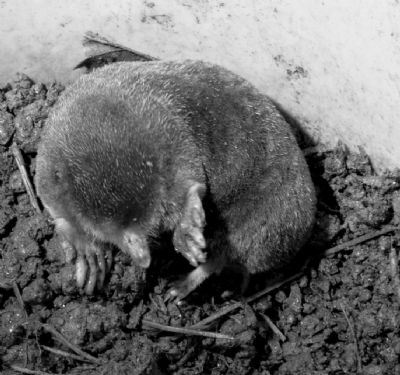
While insectivores look superficially similar to rodents in that they are small and generally shaped like mice, they are unalike in many other ways. Their eyes are tiny and often invisible, characteristics of a more underground existence, and their fur is very short, velvety in texture, and gun-barrel gray in color.
For my mom and other interested gardeners, the important difference is in their diet, though. Rodents are decidedly vegetarians, feeding mostly on plants, seeds, and nuts, while as their name implies, insectivores are predators of bugs and other invertebrate animals.
This difference is complimented by each having teeth specialized for what they eat—rodents with just two pairs of gnawing incisors in the front of their jaws and insectivores having jaws loaded with numerous sharp, pointed teeth. One species of insectivore, the short-tailed shrew, is actually mildly venomous!
Needless to say, if you are trying to attract moles or voles to a baited trap, you need to know which one you’re after when deciding the bait of choice.
The tell-tale sign of moles is their tunneling just below the surface of the ground. This tunneling pushes the turf of lawns and pastures up so that it leaves elongated, twisting and turning mounds. These temporary tunnels may be unsightly to some, but the disturbance is just cosmetic—they do not harm plant life and may even benefit it by aerating the soil.
To repair them, simply walk down the length of them to pat the ground back down. Moles use these surface tunnels to search for their favorite prey, earthworms. Interestingly, moles pull worms lengthwise through their huge front paws to squeeze out dirt and guts before consuming them.
Moles have much more permanent and extensive tunnels deeper in the ground and it is within them that traps need to be placed, if you feel the need to control them.
Voles may use the deeper tunnels that moles create, but they also build their own burrows. While moles never leave a surface opening to their tunnel systems, voles do.
So if you encounter holes in your garden (some may call these snake holes, but snakes actually don’t construct holes), there is a good chance they were made by voles. Since they actually are herbivores, unlike moles, voles can cause damage to plants. If you find root crops, such as potatoes, or the bases of fruit trees gnawed, voles are the likely culprit.
Hopefully this information is helpful in distinguishing between these two similarly sounding, name-wise, but ecologically vastly different mammals. And, maybe it will give you a better appreciation for the mostly harmless (unless you’re an earthworm) and quite interesting mole!