Vultures
Of all the fascinating birds we have in Georgia, vultures rarely rise to the top of the list of those we appreciate the most. But, because of the great scavenging service they provide us, they are certainly deserving of our respect.
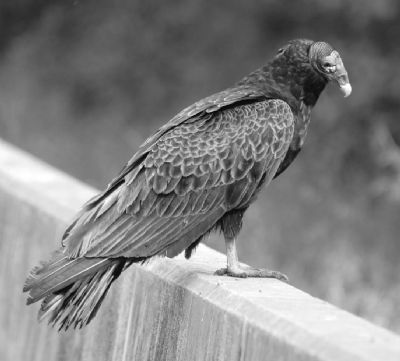
Often erroneously called buzzards, we have two vulture species in Georgia, black and turkey. Black vultures are significantly smaller than turkey vultures, have dark heads, and with the exception of the white underside wing-tips, all feathers are black. Larger turkey vultures, like their namesakes, have reddish heads and dark brown feathers.
Their flight behaviors are also distinctive. Black vultures will flap their wings rapidly when not soaring, but while soaring the wings are nearly on even plane. Conversely, turkey vultures have slow, lumbering wing flaps and when they soar the wings form a low V-shape.
Both species share the same diet—dead and decaying animals, or “carrion.” The bald, featherless heads and necks help keep them clean while feeding. The extremely corrosive digestive acids they have are essential for safely consuming putrid flesh and entrails. So powerful, these acids allow them to safely ingest naturally occurring bacteria including those that otherwise could cause hog cholera, botulinum, and anthrax infection.
Interestingly, they find and handle carrion quite differently. Turkey vultures have a very keen sense of smell and the odor of decaying flesh is what typically attracts them to food. On the other hand, black vultures do not smell well and rely on their incredible vision to locate carcasses, or at least attention surrounding possible carcasses.
Indeed, aggregations, or “wakes,” of turkey vultures often clue black vultures in that food is to be had. Despite their smaller size, black vultures are more gregarious and aggressive, and will quickly displace turkey vultures from their prize.
It’s not all bad though, because turkey vultures have weaker and less sharp bills and often rely on black vultures to rip the hide open and make the flesh more readily available. When black vultures are not around, coyotes or other mammalian scavengers often get the gluttony started for turkey vultures.
Both species, as do other scavengers, perform a great service to us by ridding our roads, towns, and country-sides of decaying carcasses and thus reducing the spread of disease. I’d hate to think of what our roads would look like, and smell like, without the help vultures provide.
Vultures are large and often roost in great numbers, especially in winter, and thus can be intimidating to many. But fear not, they have no interest in harming humans or even our pets—their dietary interest is solely on animals that have already kicked the bucket.
One certainly wouldn’t want to park their vehicle below a roost, though. In addition to the mess the vulture-poo would make, it is very corrosive and can be damaging to paint and fabrics. Roost sites should be breaking up soon though, as late February begins the breeding season for vultures.
Pairs, which typically mate for life (divorce is not in their vocabulary), will seek more remote areas to lay and incubate eggs, and rear and raise young. They will still soar in “kettles” or search for prey with other vultures during the day, but will not roost in large numbers again until late summer or fall.
If you want to learn more about vultures and other birds of Georgia, I highly recommend a recently published book entitled “The Breeding Bird Atlas of Georgia,” by Todd Schneider, Giff Beaton, Timothy Keyes, and Nathan Klaus. This book covers 182 species that breed, or possibly breed, in the state, excluding those that only winter here or just pass through on migration.
Published by and available at the University of Georgia Press, you can also find this book on Amazon.com and elsewhere on the web with a simple Google search.