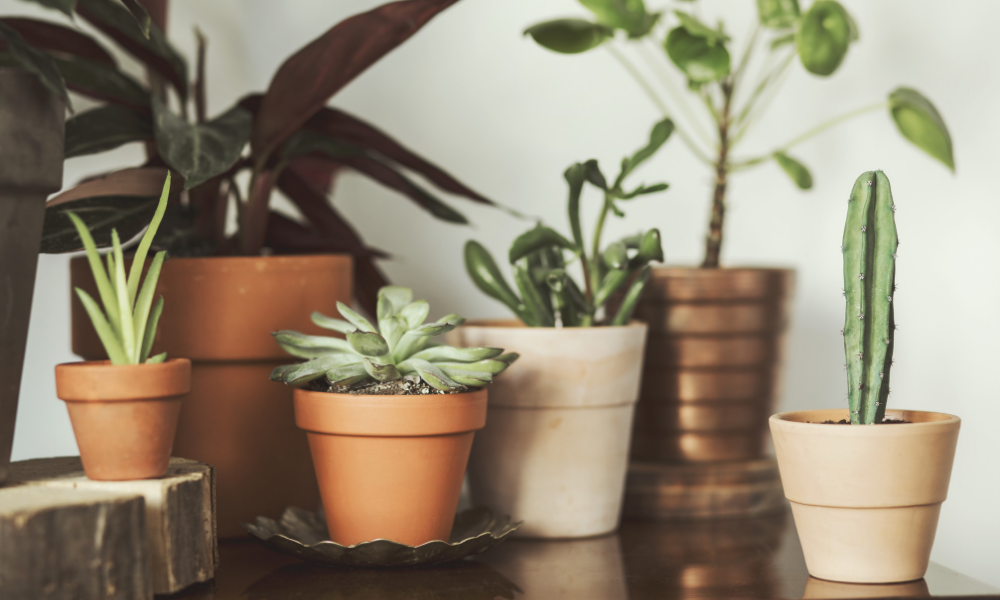
While you may want to cover your entire home in plants,
it’s important that you take into consideration the amount of attention
they require. Our indoor plant care tips will aid you in taking the best
possible care of your home’s greenery.
Avoid Dehydration and Overwatering
Too little or too much water significantly affects your
plant’s health. This cycle can damage your plant’s roots, halting its growth. Your
plant’s soil should always feel moist—not dry or wet. If the soil sticks to
your finger, your plant should have enough water for a little while. You don’t
have to stick to a specific watering schedule; water your plant only when it
needs it. A good rule of thumb is to water when you notice light-colored or
cracked soil.
Clean Plants
In addition to an adequate amount of water, plants require a
little grooming. Use a clean, damp cloth to carefully dust off the top and
bottom of each leaf. If you own a larger plant, we recommend spraying it down
in a sink or tub. You should also remove dead branches, leaves, and stems from
the pot.
Location Matters
Where you place your plants matters. Your plants shouldn’t
be near an air conditioner or a heater; temperature fluctuations will inhibit a
plant’s growth. Also, don’t move it frequently—your plant’s environment needs
to be as stable as possible.
If you do need to move the plant, place them in the new area for an hour or two a day. Slowly increase the amount of time until it fully adjusts in this space.
Pay Attention to Sunlight Requirements
Of course, all plants need sunlight; it’s one of the most important elements for growth. But how much is too much? Be sure to familiarize yourself with your plant’s species, so you can understand exactly how much sunlight it should receive. Determine which windows offer the amount of light you’re looking for to ensure your plant is in the perfect spot. Your best bet may be to place the plant in indirect sunlight and, if necessary, add artificial light.
Repot Plants
We don’t expect growing kids to wear the clothes they wore years ago. On the same hand, we shouldn’t keep growing plants in the same pots. If you notice that your plant is drying out faster than usual, or if you see its roots popping out of drainage holes, you should repot it. Typically, you’ll want to repot plants every spring. They usually establish deep roots in the winter, so it’s crucial that you provide them with room to grow, and the root growth allows plants to quickly adjust to new containers.
The new container should be only slightly bigger (by about one to three inches) than their current pot. Don’t forget to add potting soil and fertilize if necessary.
Water Properly
When it’s time to water your plants, always use room temperature water; cold water will shock the plant. Another tip is to try not to get any water on the foliage—focus the water on the topsoil. You’ll know to stop watering if water starts to come out of the drainage holes in the bottom of the pot. If there’s excess water in the saucer under the pot after you’ve watered your plant, empty it out.
We hope these indoor plant care tips help you keep your plants happy and healthy!