Tips for Losing Weight After Age 50
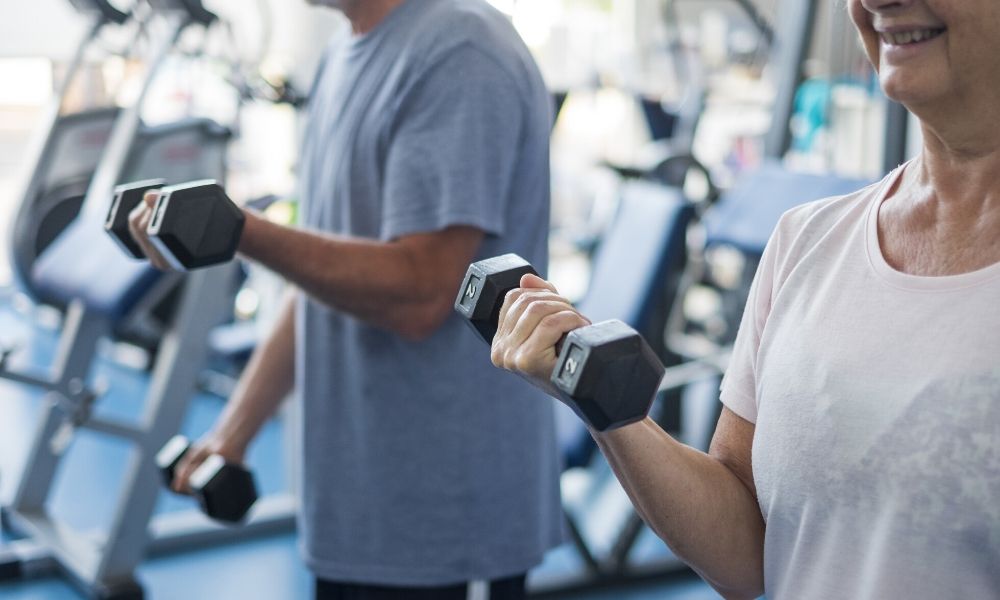
People react to turning 50 in highly individual ways, but one thing that many who hit the half-century mark have in common is weight gain. After age 50, metabolism slows and muscle mass shrinks, and the post-50 body can pack on pounds as a result. Hormonal changes, lack of exercise, insomnia, and stress all make it harder to get the weight off. If you’ve entered your sixth decade and find yourself struggling to maintain a healthy weight, try some of these tips for losing weight after age 50 (as always, consult your doctor before beginning any diet or exercise program).
Strength Training
Muscle tissue raises your basal metabolic rate—the number of calories you burn while you’re sitting still. After 50, a condition called sarcopenia causes many adults to begin losing muscle mass. The natural process of building, breaking down, healing, and rebuilding muscles slows because the body doesn’t respond as well to internal growth signals. Thee signals tell growth hormones to work with certain enzymes to keep the muscle-building lifecycle running correctly.
Strength training or weightlifting, using resistance bands, body weight, dumbbells, kettlebells, or barbells, can build muscle and slow the age-related process of muscle loss.
Sleep More
Recent studies have shown that not getting enough sleep affects the body’s response to insulin, the hormone that cleans up sugar (glucose) from the bloodstream. Insulin resistance weakens the body’s ability to use glucose as energy; instead, the body stores that unused energy as fat. Researchers found that women who slept at least seven hours per night tended to lose weight.
Reduce Stress
Stress causes the body to release cortisol, the “fight or flight” hormone, which in turn signals the body to release glucose into the bloodstream to use as energy to run or resist. The problem is that many American adults combine stress with a sedentary lifestyle, fretting on the couch or at their desks. They don’t use that boost of energy, so it ends up stored as fat.
Move More
If you’ve taken up strength training, good for you, but don’t ruin your results by sitting down the rest of the day. Set a time to remind yourself to get up from your desk and move around for ten or fifteen minutes out of each hour. Use a standing desk if you can and find other ways to build movement into your day: take the stairs, park farther away, take a walk around town on your lunch hour, and so on.
Get Your Hormones Tested
If you’re putting these tips for losing weight after age 50 into action—exercising; cutting out sugary drinks and sweets; eating plenty of whole grains, vegetables and fruit; consuming enough protein; and getting a good night’s sleep—and you’re still not losing weight, your physician might recommend you see an endocrinologist. Hormone levels change with age, but sometimes something gets unusually out of balance. Endocrinologists specialize in treating disorders of the hormone-producing and regulating system that moderates metabolism, growth, and sex drive. An endocrinologist can test for hormone irregularities and work with you to address them with diet, exercise, and medication.