
The Best Cables To Use in Bus Topology
For homes or offices that require multi-device network connection, one or several network topologies may be employed. Network topologies have certain demands that can be best achieved by implementing specific cable structures and types. Of the five types of topologies, bus topology is unique for its use of terminators and a mainline cable. In this article, we will explore the best cables to use in bus topology, as well as how bus topology works.
What Is Bus Topology?
Bus topology is a network topology type that connects all devices in a line. Terminators are fixed at both ends of the mainline wire. The terminators are essential to allowing quality signal transference between the main cable and all devices within the network. When one terminator is missing, connectivity comes to a stop.
Devices are connected to the main cable with drop lines. Drop lines work to transfer signals and data from devices to the mainline, which can then be transferred to other devices in the network system. It is vital that none of these cables break, as that separates the connection between terminators and interrupts the connection across the entire bus topology.
One flaw of this topology type is that it is more difficult to locate the source of connectivity issues within the network. There is also a limit to how many drop lines can delineate from the mainline depending on the main cable’s length. In spite of these flaws, bus topology advantages make this network setup worthwhile for many businesses.
Which Cables Are Most Efficient?
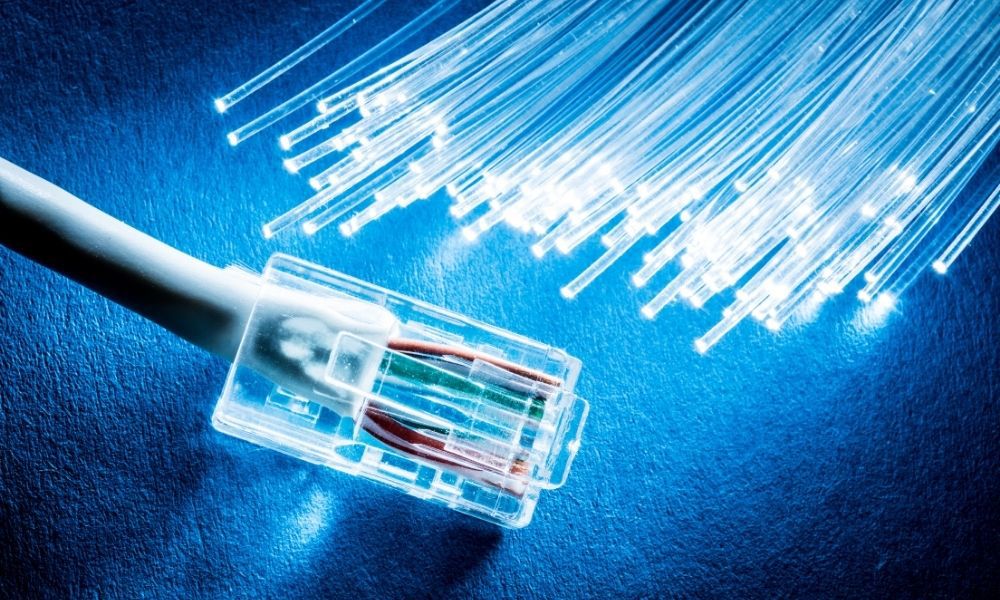
Coaxial and fiber cables are the best cables to use in bus topology. They are also popularly enlisted by phone and internet providers for their communication abilities.
So, what makes these cables so special? Since the 20th century, their improvements have made connection and communication increasingly efficient. Fiber optic cables have gained traction for their versatility. Their refinements have enhanced the medical and communication field in addition to so many other industries.
A coaxial cable is structured in such a way that an insulated layer surrounds the inner conductor. An additional conductive shield wraps around the insulated layer to prevent wire damage. The center of the inner conductor is responsible for transmitting the electric signal.
Coaxial cables are the preferred cable for bus topology because they are highly durable and easy to install. Fiber cables offer faster data transfers, which make them the reliable choice for businesses with high digital demand.
Due to their transfer speed, fiber cables are found at a much higher price than coaxial cables. Your network’s size will determine whether coaxial or fiber cables will provide optimal connection.